Showing posts with label Eleni Ikoniadou. Show all posts

4/4/19

AUDINT - The 64 short essays in this volume probe how unsound serves to activate the undead.Contributors from a variety of disciplines chart these warped zones, mapping out a zigzagging timeline stretching from the 8th century BC (the song of the Sirens), to 2013 (acoustic levitation), and speculatively extending into 2057


Image result for AUDINT—Unsound:Undead,
AUDINT—Unsound:Undead, Ed. By Steve Goodman, Toby Heys and Eleni Ikoniadou, Urbanomic, 2019.

For as long as recording and communications technologies have existed, the potential of the vibrational continuum that connects sound to infrasound, ultrasound and other inaudible frequencies has been evoked to access anomalous zones of transmission between the realms of the living and the dead.
For the past ten years the AUDINT group has been researching these peripheries of sonic perception (unsound) and the portals they open to new dimensions, activating a continual intersection between fiction and fact, and pressuring thought to become something other than what it has been. The 64 short essays in this volume probe how unsound serves to activate the undead.
Contributors from a variety of disciplines chart these warped zones, mapping out a zigzagging timeline stretching from the 8th century BC (the song of the Sirens), to 2013 (acoustic levitation), and speculatively extending into 2057 (the emergence of holographic and holosonic phenomena).
With texts by: Lawrence Abu Hamdan, Lendl Barcelos, Charlie Blake, Lisa Blanning, Brooker Buckingham, Al Cameron, Erik Davis, Kodwo Eshun, Matthew Fuller, Kristen Gallerneaux, Lee Gamble, Agnès Gayraud, Steve Goodman, Anna Greenspan, Olga Gurionova, S. Ayesha Hameed, Tim Hecker, Julian Henriques, Toby Heys, Eleni Ikoniadou, Amy Ireland, Nicola Masciandaro, Ramona Naddaff, Anthony Nine, The Occulture, Luciana Parisi, Alina Popa, Paul Purgas, Georgina Rochefort, Steven Shaviro, Jonathan Sterne, Jenna Sutela, Eugene Thacker, Dave Tompkins, Shelley Trower, and Souzana Zamfe.


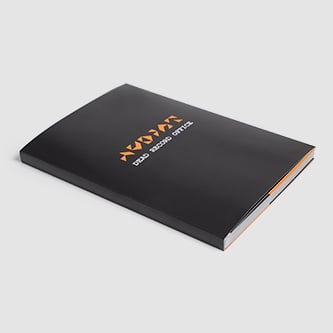
Image result for AUDINT Dead Record Office,
AUDINT, Dead Record Office, Art in General, 2014.


The Dead Record Office outlines a brief history of AUDINT from their emergence as a sonic research unit shortly after the end of the Second World War until 2014. During this documented 70-year period, the works of the three waves of AUDINT personnel are focused on and their connection to three phases of martial hauntology – the Ghost Army, Wandering Soul and Phantom Hailer – explained. The book functions as a historical document that offers insight into the framework of AUDINT’s investigations and experiments; an on going inquiry into the weaponisation of waveforms and the activities of those that harness such techniques to stake out psychological and physiological realms at the edge of perception.
The Dead Record Office reveals the deceptive sonic strategies, technologies, and programs developed by military organisations since 1944 to orchestrate the spectral phenomena of a haunting within an area of conflict for territorial gain. Instances of this frequency-based haunting of the battlefield include – World War II when the U.S. military’s Ghost Army pioneered speaker based deception techniques and apparatus; the Vietnam War in which the U.S. military deployed ‘Wandering Soul’ (‘Ghost Number 10’) tapes that imitated the voices of dead Vietcong fighters from helicopter mounted speaker units; and in Guantánamo Bay, where detainees who were legally dead yet biologically alive were tortured by Death Metal music.


2017: Greg J. Smith, Dread Bass: AUDINT’s alternate timelines reverberate with fear and death, Creative Applications, August
http://www.creativeapplications.net/environment/dread-bass-audints-alternate-timelines-reverberate-with-fear-and-death/
download PDF


2016: Philipp Rhensius, Schallkanonen und Rauchpanzer
Das englische Künstlerkollektiv Audint nähert sich beim Loop Festival der historischen Verwendung von Klang und Musik für militärische Zwecke.

http://www.taz.de/!5350924/


2016: Eleni Ikoniadou & Lendl Barcelos, The Unsound Methods of AUDINT, Wire magazine online, December
http://www.thewire.co.uk/in-writing/interviews/the-unsound-methods-of-audintdownload PDF


2016: Kristen Gallerneaux, Humming Through Salt: AUDINT’s Spurious Frequencies. ArtWindsor. Issue: Winter, Canada
https://issuu.com/barbedmagazine/docs/noisesissueiii, p22-27
download PDF


2015: Marc Couroux, Internal: AUDINT (Phonocultural Studies). CTM Magazine, Berlin, Germany
download PDF 

Ghostcode

film animation in development
Based on the book The Holo Wars by AUDINT, Ghostcode is an animation set in 2056 when Corporations and Nation states have fused into single economic and political entities. This is an era in which human flesh has been removed from the messy equations of political turbulence, resulting in conflicts being conducted by holographic and holosonic forces. The film follow the exploits of Irex2, a rogue Artifical Intelligence on the run from its undead creators as it competes against a Columbian Black Hat named Sureshot to develop A.I. Holographic fighters named AIHolos.
Fuelled by the sound of human pain, the AIHolo’s weapons require massive injections of recorded suffering. As torment becomes an economy in its own right, Pain ©Amps are constructed to generate the sonic power source. By amping up the rationale of the music industry’s most successful formula of the C20th – recording and selling the sound of poverty stricken urban areas – the functionality of suffering has been pushed to the limit. The needle is in the red, but it is pain that is wanted, not blood.


Delusions of The Living Dead

film animation, video installation
22 mins, 2015

AUDINT’s animated film Delusions of the Living Dead is a sub-chapter of their Martial Hauntology book, which documents Walter Slepian’s 1949 plan to purloin and photograph Jules Cotard’s notebook; a medical document that holds information pertaining to the process and methods required to seed walking corpse syndrome into a subject’s bed of cognition.
Martial Hauntology was released in late 2014 as a limited edition of 256 copies. It links the underground groove of the Large Hadron Collider with the vaults of the Bank of Hell; connects the Dead Record Network with the Phantom Hailer; and traces the evolution of the Wandering Soul Tapes to the viral dynamics of the online spectreware named IREX2.


11/21/15

Eleni Ikoniadou investigates the ways in which recent digital art experiments that mostly engage with the virtual dimensions of sound suggest alternate modes of perception, temporality, and experience


Eleni Ikoniadou, The Rhythmic Event: Art, Media, and the Sonic


twitter.com/eleni_ikon


The sonic has come to occupy center stage in the arts and humanities. In the age of computational media, sound and its subcultures can offer more dynamic ways of accounting for bodies, movements, and events. In The Rhythmic Event, Eleni Ikoniadou explores traces and potentialities prompted by the sonic but leading to contingent and unknowable forces outside the periphery of sound. She investigates the ways in which recent digital art experiments that mostly engage with the virtual dimensions of sound suggest alternate modes of perception, temporality, and experience. Ikoniadou draws on media theory, digital art, and philosophical and technoscientific ideas to work toward the articulation of a media philosophy that rethinks the media event as abstract and affective.
The Rhythmic Event seeks to define the digital media artwork as an assemblage of sensations that outlive the space, time, and bodies that constitute and experience it. Ikoniadou proposes that the notion of rhythm--detached, however, from the idea of counting and regularity—can unlock the imperceptible, aesthetic potential enveloping the artwork. She speculates that addressing the event on the level of rhythm affords us a glimpse into the nonhuman modalities of thought proper to the digital and hidden in the gaps between strict definitions (e.g., human/sonic/digital) and false dichotomies (e.g., virtual/real). Operating at the margins of perception, the rhythmic artwork summons an obscure zone of sonic thought, which considers the event according to its power to become.


“Ikoniadou’s The Rhythmic Event provides a substantial Deleuzian analysis of contemporary digital sound art, and her work stands as an important contribution to a new materialist understanding of the digital, particularly the affective experiences that digital audio is capable of eliciting from a body.”—InVisible Culture


The Rhythmic Event is a deep plunge into an aesthetics of experience expanded into pattern, perception and sound, and onwards into an abstract viscerality. Ikoniadou is a crucial guide to the dark chambers of recent interactive art.”—Matthew Fuller

The Rhythmic Event rethinks the digital in striking terms. Here the digital is relational, contingent, and always mixed up with the incalculable. It also rethinks rhythm. Here rhythm is an ongoing creation of worlds. This is a creation so in excess of our normal range of perception that humans can sense it only with the assistance of groundbreaking work by artists and technologists. It then rethinks time in terms of vibratory potential. It brings all this together beautifully, drawing on unusual examples at the junction of art and technology. The Rhythmic Event makes a major contribution to contemporary thinking about the digital, perception, art, and technology. It is no exaggeration to say that it will make you think about—and feel—the world differently.”—Andrew Murphie

“In The Rhythmic Event, Eleni Ikoniadou explores the fringes of acoustic experience. Deftly combining theoretical speculation with close accounts of recent digital artworks, she calls attention to sonic events that we feel rather than directly hear, that move us without our being able to grasp just how, and that open us to a world of microperceptions and suspended temporalities.”—Steven Shaviro

“Eleni Ikoniadou’s The Rhythmic Event develops as a speculative-experimental exploration of the abstract materiality of rhythm. Drawing on the work of a range of contemporary philosophers, she constructs an analysis of digital media art practices that works between disciplines. What emerges from her account is a conceptualization of the 'rhythmicity' of the event that probes the value of a radical empiricist approach to the microaesthetics of media art forms that operate across both the actual and virtual, human and nonhuman dimensions of contemporary experience.”—Andrew Goffey

It’s a key player in the relationship between time and space, but what nontrivial roles does sound play in new media art? This seems to be the point of departure for this book, investigating the abstract but present ‘forces’ that sound is able to trigger. Through an analysis of some specific sound installations Ikoniadou shows how the use of audio elements often transcends the perception of sounds and frequencies, enabling different abstract systems that conceptually override those perceptions and generate different experiences. It’s the ‘rhythmicity,’ as the author defines it, or the “halting moment” in the continuous flux of information. It’s disconnected from personal perceptions and it’s at the core of this analysis. This “discreet continuum” is described in the resonance of interactivity systems, through hypersonic sensation that leads to a “hyperperception.” Furthermore the rhythmic quality of inaudible sounds urge a re-thinking of the linearity of time, stimulating imaginary entities and counterbalancing the “ocularcentric” predominance in Western art. The deconstructed sound artworks are then considered as abstract “rhythm machines.” They are metaphorically played, while perceived and recognised as sound ‘traces’ in visual artworks. The original premise of the book is stated on the basis of theoretical speculations and an analysis of artwork, but its major contribution is an investigation of the usually ignored relational element in digital sound, which creates rhythmic ‘events’ that clearly affect the edges of our perception. - neural.it/

A much-needed contribution to the field of media philosophy, sound and digital studies, this book is petit and extremely dense. Part of Brian Massumi and Erin Manning’s Technologies of Lived Abstraction series with MIT Press, Ikoniadou’s latest work shows the extent to which research in the area of affective digital technology and art is steadily progressing.
Ikoniadou’s interest focuses on the notions of rhythm and event and understands them as central for the development of a new non-anthropocentric rhythmanalysis of digital sonic art that helps exploring “the inconceivable, the unnameable, and the unknowable forces of time” (84). The aim of the work is to provide a fresh perspective to a speculative philosophy of media that focuses on the creative unpredictability of the event. The originality with which this goal is successfully achieved provides plenty of food for thought for further scholarship.
Ikoniadou’s work goes a long way toward opening up the notion of rhythm and disentangling it from a tradition of thought that understands it in connection with structure and meter. Rather than being comparable with Platonic form, or Heraclitean flow, rhythm becomes here a “tremulous undulation” (13). The rhythmic and vibrational ontology (see Goodman 2009) here proposed also reminds of debates raised in Modernity and highlights an historical and theoretical continuum that is hinted to in relation to the work of Friedrich Nietzsche, but that could focus more on a non-strictly philosophical heritage (see Bode 2014 and Laban 2014).
From an immanent ontological stance deriving from her radical empiricistic approach, Ikoniadou develops a concept of the event and of ‘futurity’ defined as ‘pure becoming’, in antithesis to ways of understanding the future under the light of probability, and therefore predictability. The author maintains that futurity can provide us with a horizon of freedom and hope in relation to current state of affairs in neo-liberal societies. Contrary to what she identifies as a common critique to abstract materialism, the claim of the book is that exchanging probability with futurity can impact on the way we look art as much as current socio-economic issues.
Sonic art is successfully presented in the book as an exemplary milieu where the unpredictable aspects of the rhythmic event may be evanescently and pre-consciously felt. Besides aiming to disentangle sound studies from music studies, the focus on the digital proposes, importantly, to revise theories that depict it as necessarily discreet versus a putative continuous analogue tight theoretically to (a restricted view of) the Bergsonian duree. Moreover, the digital also provides the author with a common denominator to explore other non-strictly sound-related examples of interactive media art.
The reader is taken on a compelling tour encompassing thought-experiments, the vibratory life of cells, the affection of media environments, the digital agencies of ‘hertizian architectures’, dream-like states of altered perception, digital moving-images both in their capacity to upset the notion of time and in their ability to surprise us in their making.
These examples are assembled following a meta-methodology taken from the work of Felix Guattari and entailing “the production of transversal assemblages between heterogeneous fields” with the aim of “construct[ing] a middle-space” (10). In this sense we might say that the author is also sketching out the outline of a rhythmic methodology in itself.
The book is divided in five chapters with introduction and conclusion embracing three sections dedicated to the architecture of the rhythmic event: ‘virtual digitality’ (27), ‘hypersonic sensation’ (45) and ‘rhythmic time’ (67). This harmonious layout works well as a structure from or underneath which the vibratory and turbulent content develops and emerges in several sonic-digital interludes.
Much of the ground covered by the author in the introduction focuses on tracing the heritage of her theoretical approach and defining core themes and concepts. Ikoniadou is furthering her earlier and recent work on rhythm (2012 and 2014) by drawing from the affect- and virtual-related theories of Gilles Deleuze, Felix Guattari and Brian Massumi. She introduces also the work of Michel Serres, art critic Susanne Langer and some unexpected sources related to the early work of Friedrich Nietzsche, together with more usual mentioning of Henri Bergson’s, Gaston Bachelard’s and Henri Lefebvre’s works on rhythmanalysis.
The challenge that Ikoniadou proposes is to think of rhythm as ‘discrete continuity’, as a ‘centre of indetermination between actual and virtual’ (82), and in this sense she maintains that
“it is worth thinking of rhythm topologically, as the generative gap that synthetises and connects through immediacy instead of merely unifying instants” (37).
Topology can be defined as ‘the study of geometrical properties and spatial relations unaffected by the continuous change of shape’ (OED) such that it allows change to arise without interruption. This has brought Steven Connor to define it as ‘geometry plus time’ and ‘geometry given body by motion’ (2004: 108). In this regard, the task at hand is to further the parallel made between rhythm and the topological in relation to a more sensuous spatiality. Ikoniadou invites us to uncover the transformative trait of the rhythmic event in other art forms, so we might ask how would the concept of rhythm as rhythmicity or discrete continuum, help in unpacking other aspects of a philosophy of media? What would a non-digital or not-only-digital and non-human spatialisation of rhythmicity look like and, most importantly, how would it feel and, even, smell like?
As a counterpart to rethinking the digital, something at the hearth of Ikoniadou’s contribution, it seems that to further a speculative philosophy of media we need to look for ways of understanding the impact of rhythmicity ecologically in the interplay of materiality and temporality. The challenge is that of conceiving the enmeshment of rhythm and spatialised matter in analogue yet not anthropocentric and determined terms: as more-than-one (see Manning 2007).
This thought-provoking book unlocks the potential of rhythm and opens up new avenues to exploring both the materiality of the digital and the slippery, shifting dynamics of vibrational bodies. - Paola Crespi