4/9/19

Mario Montalbetti - His texts are a constant invitation to leave language behind & discover there is nothing to replace it. What takes the place of that vacuum? Basically lessons on life we call poetry. But he is not so sure.

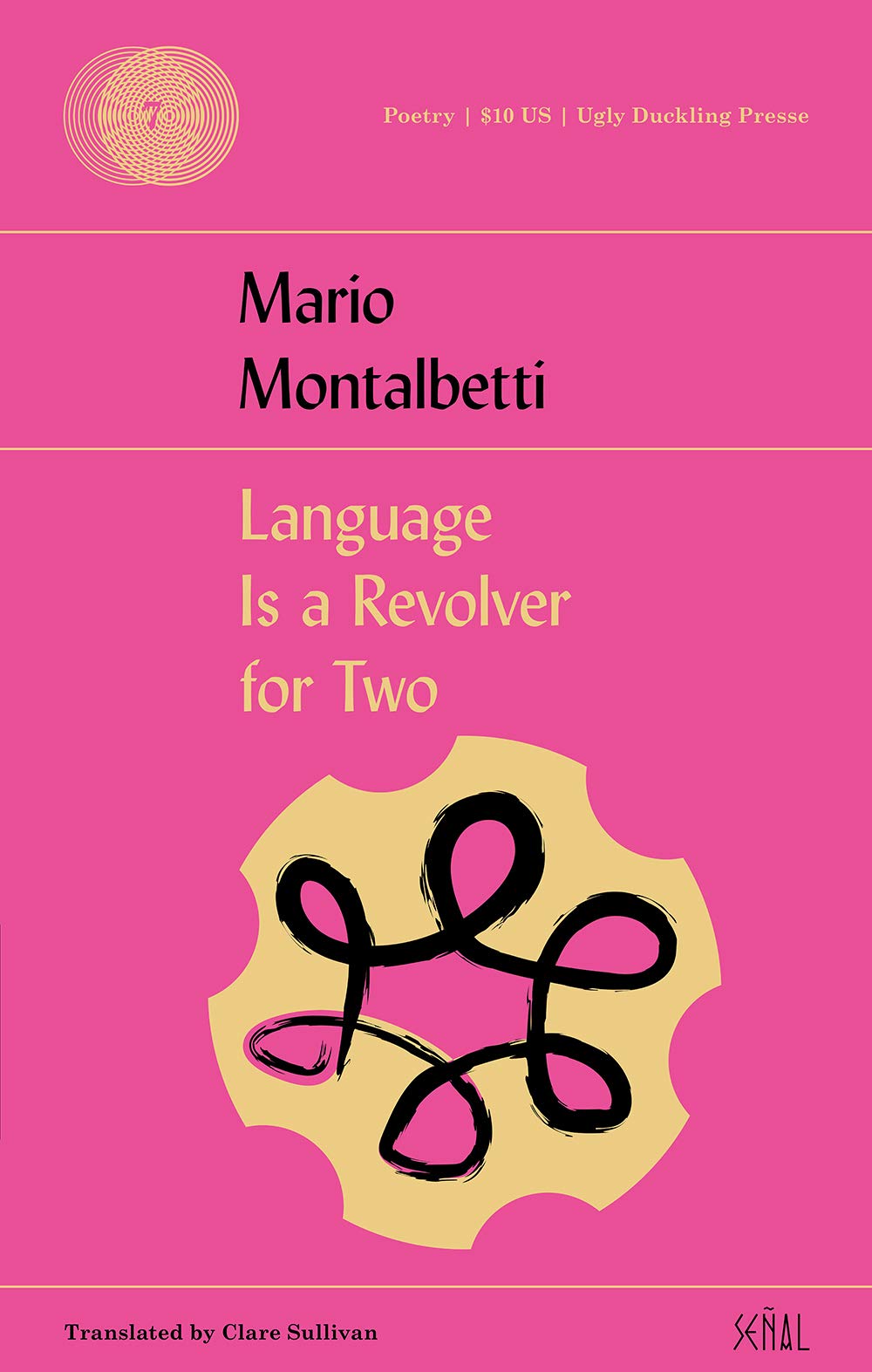
Language Is a Revolver for Two (Senal): Montalbetti, Mario ...
Mario Montalbetti, Language Is a Revolver For Two, Trans. by Clare Sullivan, Ugly Duckling Presse, 2018.

Language Is a Revolver for Two revolves around the premise that within an economy of supply and demand (such as language) the supply never affects love. Thus, coins and tramways, imaginary Inca poets, and black olives are examined in order to intervene in such a framework and, ultimately, to find something outside of it.


one thing and one thing only affects love: the demand for love.
supply doesn’t affect love


Peruvian born poet and linguistics professor Mario Montalbetti’s latest collection of poetry Language Is a Revolver for Two showcases his incredible ability to use poetry to rhythmically unfold a prophecy to his reader. Throughout these fourteen poems, Montalbetti consistently uses the motif of movement, particularly its risings and fallings, as a way of tracking his exploration of language’s, and by extension, the world’s economy of supply and demand. Essentially delineating the reason that law cannot be fully applied to love: “one thing and only one thing affects love: / the demand for love. / … supply doesn’t affect love.”
The collection unfolds beginning with the first poem, “As I Conceive It We Are Climates,” which is set against the void-like landscape of a man in Lisbon looking out at a river: “He doesn’t write, doesn’t drink, doesn’t think / about the things he sees or the sounds he hears.” From the onset, water is used as a key symbol, along with fish and salt. The fish often speak to this coldness and this sense of violence, acting as an omen for man’s inescapable mortality even though “language is faster / than the world.”
In the poem which harbors the collection’s namesake, Montalbetti begins by establishing the manner in which other species use language to combat each other: “cow—cawing / goose squawking,” etc. By the end, he sets man and woman against one another, but not without highlighting their common condition of humanity: “man, wo / man—speaking, speak / ing, until the heart / is pulp / silencing—a bonze on fire.” Montalbetti likens the act of man and woman successively silencing each other to a sacrificial act by a monk. Man cannot express his love without the use of language, which is destructive by its very nature. Hence, one cannot love without acknowledging this greater, cosmic sacrifice.
As the reader moves towards the collection’s close, the motif of movement accordingly shifts more heavily to the evocation of descent, gravity, and the sensation of falling. A personal favorite of mine is the poem “Magnifichant,” in which Montalbetti follows a night of lovemaking by a sunrise whose color he describes as “that dawn orange / as a ripe papaya / falls from the sky / and shatters upon the pavement.”
Montalbetti ends the collection fittingly with a poem titled, “Goal and Object of a Poem,” noting the paradox of poetry’s central objective: “trying to express a private sentiment / in public language.” The necessity for total intimacy is what governs all the greatest poetry, examining their subject until it’s “Smashed to bits against a dark hillside / that wasn’t in the charts” with nothing left but “the wreckage.” It’s as if Montalbetti is daring his reader to seek permanence in poetry’s aftermath, to maintain remembrance in spite of the difficulty. In this sense, every reader’s experience of his poetry will differ depending on his or her willingness to dare, dream, and seek possibilities where there may be none. - Juliana Clark
http://columbiajournal.org/review-language-is-a-revolver-for-two-by-mario-montalbetti/


Mario Montalbetti's Language Is a Revolver for Two reviewed on Tupelo Quarterly
Mario Montalbetti's Language Is a Revolver for Two reviewed in The Arkansas International
Language Is a Revolver for Two included on Words Without Borders' Our Favorite International Reads from 2018


An Economics Lesson

Why aren’t the markets affected
by the grand desertions, by love affairs that end,
by twilights and disappointments?

No one knows. A few people know:
because the markets respond to two things
and two things only: capital inflows
and expected earnings.

He said this to himself as he walked
with hurried steps, preparing class
on the way to class. He crossed the street.

The lottery man was standing
on the corner, tickets stuck
to his flannel shirt with a safety pin.

He imagined roosters. He kept walking.

He asked himself rhetorically:
and what affects love? The class continues.

No one knows. A few people know:
one thing and one thing only affects love:
the demand for love.

(This is the surprising law
that he must convince them of:


supply doesn’t affect love.)


Magnifichant

After doing a job that is remunerated, immune
almost municipal, taking care that my son
doesn’t stumble, and making nocturnal love,

I extinguish the megawatts
and drink alcohol til lubricated
(moonshine, muni, near connubial)

later between the slats of the shutters I can see

that dawn orange as a ripe papaya
falls from the sky
and shatters upon the pavement.
http://www.washingtonsquarereview.com/mario-montalbetti/


A couple of years ago, Mario Montalbetti offered a poetry reading in Buenos Aires, at the La 


Internacional Argentina bookstore, managed by Francisco Garamona and Nicolás Moguilevsky, the headquarters of the mythical Editorial Mansalva. They presented Montalbetti that evening, and Gerardo Jorge accepted the mission of saying a few words before the guest opened his selection of poems; the Peruvian poet’s gray hair and glasses didn’t presage the currentness of his proposal, his corrosive irony and his way of problematizing language. For many attendees, that evening was like a glass of cold beer; the freshness of that scene remains intact in the anthology Huir no es mejor plan [Running away is not the best plan].
Gerardo Jorge’s selection of Mario Montalbetti’s work consists of a survey of eight books, which go from 1978’s Perro Negro: 31 poemas [Black dog: 31 poems] to 2016’s Simio meditando (ante una lata oxidada de aceite de oliva) [Ape meditating (in front of a rusty can of olive oil)]. Along with this sample, and as an epilogue, is an interview between the two—the selected and the selector—in which nothing is wasted: like Humboldt’s penguins, the poet migrates across the entire Latin American tradition to give a panoramic vision of the currents and coastlines on which his proposal is based.
That said, it’s possible that this burst of publications of his books throughout the continent and even in Spain comes at a moment when poetry is passing through a state that is, if not critical, at least singular. Seemingly, the emergence of new technologies and the editorial boom of certain phenomena that seethe around us take for granted that the tone of poetry should be entirely lyrical and separated from its time and place of enunciation. Poetry, in such cases, is empty of any problematic emerging from its field of action, on the level of confronting the discourses that define what is real and what isn’t: they create an experience anchored to the past and a reader who knows what he’s looking for.
On his part, Montalbetti offers another angle, if not many, in which writing puts its possibilities under injunction, not without adopting that hint of black humor that characterized other precedents like Antonio Cisneros, Nicanor Parra, and Enrique Lihn. For example, his “Poema en Homenaje al V Congreso Nacional de Filosofía del Lenguaje, Huampaní 26-28 de junio del 2010” [Poem in homage to the Fifth National Conference of the Philosophy of Language, Huampani 26-28 June 2010] opens with the question: “¿cuál es la diferencia entre una vaca y el lenguaje?” [what’s the difference between a cow and language?]. Well, according to the poet, the cow:

Pace al lado del camino
El camino da un rodeo
Y lleva hasta el granero
La vaca cruza el camino
Sin rodeos
El lenguaje no puede hacer eso.
[Grazes beside the path
That path takes a detour
And reaches the barn
The cow crosses the path
Without detours
Language can’t do that.]
He seems to be saying that, in poetry, we must take nothing for granted, much less its materials: an affirmation that not only frames Montalbetti in that line, so well developed in the latter half of the twentieth century, that line of distrust that also allows him to search in different waters, of different consistencies and temperatures: the poem passes by the essay, it passes by discourse prepared for an unknown audience, and at the same time it establishes itself through logical mechanisms that allow for the scientific confirmation of any sentence. This pirouette, which is also the pirouette of irony, confers to the text the ability to disarticulate something that seems untouched these days: knowledge and, therefore, information.
Perhaps we ought to think of Mario Montalbetti as that student who’s always sitting in the back of the classroom asking uncomfortable questions, or who points out, in the midst of the professor’s enthusiasm, that there’s an error in his explanation. He also reminds us of that character from the novel Birthday by César Aira, who discovers, about to turn fifty, that an idea he has believed in his whole life about the phases of the moon was completely mistaken, until, at one moment, he confesses: “I see it all as an illusion, a simulacrum made of words.” And that’s where his poetics come into play, in the dismantling of an assemblage, which is the basis of his great 2012 book Apolo Cupisnique, perhaps the one that best condenses his work, with a poem like “Biografía” [Biography]:
Me busqué a mí mismo
Y me hallé a mí mismo
Y me hallé a mí mismo, sonso.
Elogié una sola cosa a cambio de todo
Y luego negué caminando bajo palmeras.
Llegué a la inevitable certidumbre de que el devenir
Me alcanzaba en olas serias.
Nada es. Tal vez el fuego es. Busqué leyes.
[I searched for myself
And I found myself
And I found myself, stupid.
I praised one thing in exchange for all else
And then I denied walking under palm trees.
I reached the inevitable certainty that changing time
Would reach me in serious waves.
Nothing is. Maybe fire is. I searched for laws.]
The end of this verse relates again to Aira’s character, who at one point confesses to not knowing anything, saying “I only know I don’t know everything. And I don’t even know that with conviction, I just find out by accident, by stumbling in.” This leads to that argument that Montalbetti’s poetry is often “cold,” “calculated.” This is true, in a sense, if we see in this project of trial and error a highly scientific element, with the poem as an experimental field. But, at the same time, yes and no, since these measurements and tests are registered by an I that doubts, that often possesses a heavy emotional weight and, above all, a voice that wraps it up in a feeling of estrangement, of being outside, of asking “why are there Peruvians instead of no Peruvians?” or, from his first books, pointing out empty houses, towns that appear out of nowhere, lonely places, “five minutes of horizon,” until he tells himself: “I am not from here.” As if the poet and the poem had another sense of belonging that is neither sedentary nor nomadic.
It’s possible that, at this point in the review, some readers would insist on my mentioning the influence of Montalbett’s work as a professor of linguistics in different American universities, and those readers wouldn’t be wrong. The poet says it himself in the interview from the epilogue:
“I’m still a linguist, and I teach linguistics at the university. And that ambiguous or mistaken relationship with language, from a double angle, has continued up to now. And I think it’s that formal, linguistic part that sometimes places me on the margin of what’s really happening in Peru.”
And it’s possible that this relation with the word is what defines the true place of this writing, that is, in the proceedings of speech, his rootedness in language; this has also allowed for the current reception of his writing in Latin America, creating, at every visit and reading, an audience curious to hear his mechanical instruments and his evasion maneuvers. The selection of Huir no es mejor plan works as a one-way ticket toward those areas, to those experiences of language that are “part deceit, part hope, part truth.” - Diego Alfaro (Translated by Arthur Dixon)
http://www.latinamericanliteraturetoday.org/en/2018/november/huir-no-es-mejor-plan-mario-montalbetti


Mario Montalbetti (Lima, Peru, 1953) has a PhD in Linguistics from MIT. He has taught linguistics at Cornell, UCLA and The University of Arizona. Currently, he is Professor of Linguistics at the Pontificia Universidad Católica del Perú. He has published 9 books of poems, the first one Perro Negro (Arybalo) in 1978, the last one Simio meditando (Mangos de hacha) in 2016. His poetry has been published in Mexico (by Aldus) and Spain (Liliputienses). Excerpts of his work have been published in Ecuador (Ruido Blanco) and Argentina (Mansalva). He has also published an essay on language and sense (Cajas, Fondo Editorial PUCP), a collection of essays on language and culture (Cualquier hombre es una isla, Fondo de Cultura Económica) and a study on a poem by Blanca Varela (El más crudo invierno, Fondo de Cultura Económica). He is a member of the Editing Committee of Hueso Húmero, a journal of arts and letters published in Lima, Perú.

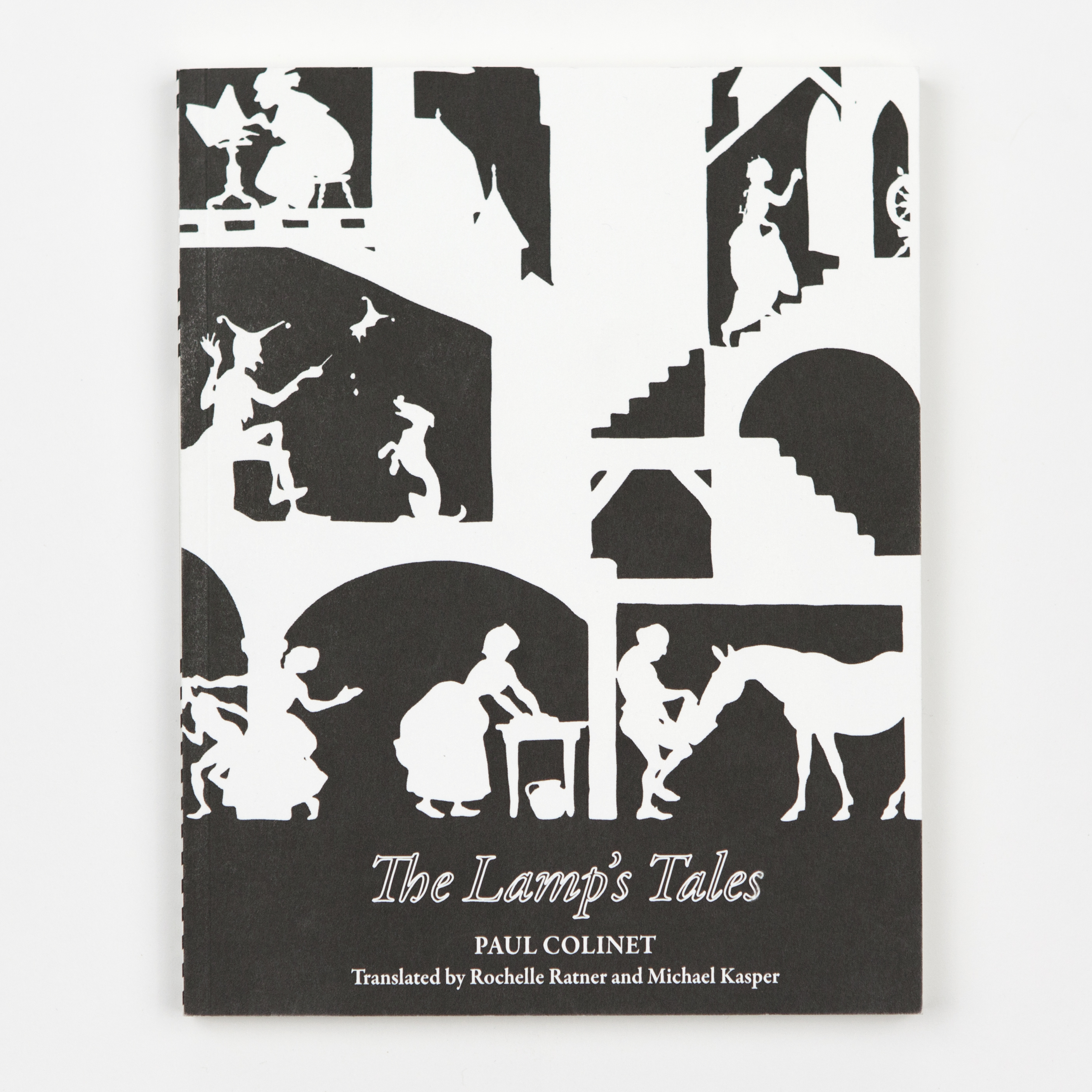
Paul Colinet "is the Don Juan of words". His poems—rich with the enchanted atmosphere of the folk parable and fairy tale, as well as a generous helping of Rimbaud and the Comte de Lautréamont—are imbued with a dream-like aura, rife with wordplay and contradiction, and suffused with a playful sense of the fantastic


Paul Colinet, The Lamp’s Tales, Trans. by Rochelle Ratner and Michael Kasper, Pleasure Editions, 2019.
excerpts


The poet Paul Colinet (1898–1957) was a primary figure in the Belgian Surrealist group, one of the many productive offshoots of the Paris Surrealists formed in the early part of the 20th century. While remaining allied to the group in Paris, the Belgian Surrealists developed an autonomous style and a concern all their own, and Colinet was one of their shining stars. His poems—rich with the enchanted atmosphere of the folk parable and fairy tale, as well as a generous helping of Rimbaud and the Comte de Lautréamont—are imbued with a dream-like aura, rife with wordplay and contradiction, and suffused with a playful sense of the fantastic.

Experimental in both language and narrative, Colinet’s works are a treasure trove, and wholly deserving of a spot beside those of other masters of the French prose-poem like Max Jacob, Pierre Reverdy, and Henri Michaux. But despite having been first translated by Paul Bowles in Charles Henri Ford and Parker Tyler’s View magazine in 1946, much of Colinet’s work has still never been rendered in English. The Lamp’s Tales, a decades-spanning set of translations by Rochelle Ratner and Michael Kasper, is a small corrective to this oversight, and an estimable introduction to the poet’s fanciful and daring world.


NonsenseSonatas and Headlong Lyricism: Interview with Michael Kasper


The Bike
     The bike is a health device for external use that's mainly meant to cure walking.
     The packaging for this device is based on the properties of the circle and the lever. Its vital parts are as follows: the trouser fly, on which users rest their hands; the goblets, on which the feet are placed; the two gazelles and the windmill, which constitute the device's propulsive system; the telephone, by means of which the equipment breaks in three; the geezer or godmother, who trots non-stop from the rear gazelle to the windmill; the scaffolding, which connects the trouser fly to the two gazelles; finally, the cloakroom, on which users rely for their foundation.  
     Before employing the device, users should take care to confine the two gazelles with help from the piggy bank, a kind of narrow corridor with compressed air. They should make sure too that the feet press on the goblets in turn.  One or two tranquilizers enable the trouser fly to temper the gazelles' enthusiasm, if necessary. The device works on solid ground.  
     Children generally use a bike with three gazelles. When a fourth is added, and the trouser fly's pulled up, one need only add a din to make a car of it. In such a case, the cloakroom becomes collective and serves to support several foundations.
 --Translated by Michael Kasper

On "The Bike":
Paul Colinet (1898-1957) was a Belgian Surrealist writer, of delightful prose poems, mostly. Like other authors in that distinctive grouplet, Colinet's work was little published in his lifetime and outside Belgium he's still little known. Paul Bowles translated a few of Colinet's pieces into English in the 1940s; Rochelle Ratner (late New York poet and editor of the American Book Review) did a bunch more at Bob Heman's request for a special issue of his little magazine Clown War in the 1970s. To Ratner's forty or so renderings, I've now added forty of my own—based on the collected edition of Colinet's works, published a decade after the Clown War issue—to make up Pleasure Editions' The Lamp's Tales and Other Short Prose.
Colinet, who for decades commuted by bike to and from his day job as a civic functionary in a suburb of Brussels, wrote prose poems full of whimsy and wordplay. The seeming discrepancy between life and art was typical of the Belgian Surrealists: Paul Nougé was employed as a biochemist, Louis Scutenaire was a lawyer, and the painter Magritte always cultivated that bourgeois look: suit, tie, and bowler hat. They invented normcore.
In "The Bike," which is part of a sequence of short prose entitled "Friday's Backpack," Colinet employed the simple but effective gimmick of substituting unexpected words, a strategy he used in other poems too, as a way of fulfilling one of the central intentions of Belgian Surrealism: to create 'les objets bouleversants' (surprising, disruptive objects). - Michael Kasper
https://www.poetrysociety.org/psa/poetry/crossroads/own_words/Colinet/


Paul Colinet: Selected Prose Poems
First published by Clown War, 1975.

4/8/19

Neolithic Childhood examines how the artistic avant-gardes reacted to the multiple crises of European modernity around 1930 – the “crisis of consciousness,” the revisions of early and pre-history, the imperialist struggle, the barbarism of technological mass war, the shock of capitalist industrialization, the failure of the Second (Socialist) International, the endgame of bourgeois humanism and the hypocrisies of colonial discourse.

Image result for Tom Holert, Neolithic Childhood
Neolithic Childhood: Art in a False Present, c. 1930, Ed. by Anselm Franke and Tom Holert, Diaphanes, 2018.                


download manual for Neolithic Childhood
audio and video recordings


Resonating at the heart of Neolithic Childhood. Art in a False Present, c. 1930 is the question whether art has present, past, and future functions. The modernist assertion of the autonomy of art was intended to render superfluous art’s social and religious functions. But what if the functionlessness of art comes under suspicion of being instrumentalized by bourgeois capitalism? This was an accusation that informed the anti-modernist critique of the avant-garde, and particularly of Surrealism. The objective throughout the crisis-ridden present of the 1920s to the 1940s was to reaffirm a once ubiquitous, but long-lost functionality—not only of art.
The publication accompanying the exhibition examines the strategies deployed in this reaffirmation. These include the surrealist Primitivism of an “Ethnology of the White Man” together with the excavation of the deep time of humanity—into the “Neolithic Childhood” mapped out by the notoriously anti-modernist Carl Einstein (1885-1940) as a hallucinatory retro-utopia. The volume brings together essays by the curators and academics involved in the project, primary texts by Carl Einstein and a comprehensive documentation of the exhibition including lists of works, texts on as well as images of numerous exhibits and finally installation views. At the center of the volume, a glossary discusses Carl Einstein’s own theoretical vocabulary as well as further associated terms, such as Autonomy, Formalism, Function, Gesture, Hallucination, Art, Metamorphosis, Primitivisms, Totality.
With contributions by: Irene Albers, Philipp Albers, Joyce S. Cheng, Rosa Eidelpes, Carl Einstein, Anselm Franke, Charles W. Haxthausen, Tom Holert, Sven Lütticken, Ulrike Müller, Jenny Nachtigall, David Quigley, Cornelius Reiber, Erhard Schüttpelz, Kerstin Stakemeier, Maria Stavrinaki, Elena Vogman, Zairong Xiang, Sebastian Zeidler
With reproductions of artworks by:
Jean (Hans) Arp, Willi Baumeister, Georges Braque, Brassaï, Claude Cahun, Lux T. Feininger, Max Ernst, Florence Henri, Barbara Hepworth, Hannah Höch, Heinrich Hoerle, Paul Klee, Germaine Krull, Helen Levitt, André Masson, Alexandra Povòrina, Gaston-Louis Roux, Kalifala Sidibé, Louis Soutter, Yves Tanguy, Toyen, Jindřich Štyrský, Raoul Ubac, Paule Vézelay and others.
Curated by Anselm Franke and Tom Holert. Advisory board: Irene Albers, Susanne Leeb, Jenny Nachtigall, Kerstin Stakemeier


At Berlin’s Haus der Kulturen der Welt, an exhibition presents art from the turbulent interwar years as an archaeology of knowledge
The stock market crash and mass unemployment, political polarization, the industrialization of perception, the violence of colonialism: “c. 1930” was a time of crisis in modernity. For the artistic avantgardes in Europe, the contemporary condition also became problematic; the impositions of the present led artists to break out into an imaginary realm of the archaic and the exotic— seeking out alternative origins and points of departure for humanity. New sciences and the fields already undergoing profound changes— such as ethnology, archae ology, psychology, and mathematics—served as resources. “World art” became a key concept for revising history and modernity.
Taking its cue from texts by the extraacademic art historian Carl Einstein, an exhibition and conference will thematize the upheavals, openings, and contradictions that became manifest in art and the humanities from the 1920s into the 1940s. The “Neolithic Childhood”—a concept used by Carl Einstein to characterize his understanding of Hans Arp—seemed to be a helpful fiction through which to critique the present.
From Max Ernst’s series of works on non-human natural history and Brassaï’s photographs of prehistoric-looking graffiti to the sexual iconographies of Toyen and Catherine Yarrow’s mask-like watercolors: the aesthetic politics of Surrealism play a central role in the exhibition. A panorama of 180 artworks and 600 archival sources propose an insight into the interaction between the visual arts, politics, philosophy, ethnology, psychology, and the natural sciences in the period between the world wars. The exhibition offers the first public view of the original manuscripts of Carl Einstein, who—with the intention of being anti-canonical—contributed substantially to the canonization of modern art. Magazines such as Documents, which was significantly influenced by Georges Bataille and Carl Einstein, works by well-known artists—such as Hans Arp, Georges Braque, and Paul Klee—and works by less familiar figures demonstrate the role played by art and visual culture in grappling with the crises around 1930.


The neolithic, or new stone age, was the era of human history in which nomadic hunter-gathering gave way to sedentary farming with crops and livestock. The title of the exhibition ‘Neolithic Childhood. Art in a False Present, c.1930’, curated by Anselm Franke and Tom Holert, refers to a 1930 description of the artist Hans Arp. In an article titled ‘l’enfance néo-lithique’, published in Paris in Georges Bataille’s surrealist magazine Documents, the author and art historian Carl Einstein focused on playful and animistic aspects of Arp’s blending of the archaic and the modern. To Einstein’s encyclopaedic thinking, the artist’s wood and string reliefs relate to prehistoric rites and destructive forms of children’s play. The exhibition’s title suggests a view of the art and culture of the interwar years in terms of an archaeology of knowledge, using Einstein’s work as a lens. This era experienced a blooming of art and culture on the one hand and political and economic crises on the other: the high numbers of unemployment and the rise of right-wing and nationalist movements across Europe that led Freud to write, in 1930, Civilization and its Discontents.
The curators have brought together around 180 artworks and 600 archival objects. Rather than offering a direct biographical narrative about Einstein, the show tries (insofar as it is possible within an exhibition display) to render visible the fascinating world underpinning the period’s artistic and intellectual discourse. The resulting panorama – or, should we say, epistemic landscape – includes works by Willi Baumeister, Georges Braque, Maya Deren, Max Ernst, Hannah Höch, Paul Klee, André Masson and Kalifala Sidibé, among others.

Paul Klee, (Metamorphosen:) der Zusammenbruch der biblischen Schlange, 1940, coloured paste on paper on cardboard, 34 × 49 cm. Courtesy: © Zentrum Paul Klee Image Archive, Bern
Stretching over two halls, the show’s first chapter is formed around Einstein’s most important intellectual project: his plans for a five-volume ‘Handbuch der Kunst’ (Manual of art), worked on from 1935 and unfinished by the time of his death in 1940. A prominent place is given to the draft of 47 typewritten pages, mounted on a blue wall and accessible only via a low yellow metal platform. It is surrounded by a dozen vitrines, packed with books and printed matter representing the art publishing of that era: from magazines such as Weltkunst, founded in 1930 in Berlin, to art-historical encyclopaedias like the famous ‘Propyläen Kunstgeschichte’, first published in 28 volumes between 1923 and 1940. In 1926, Einstein’s polemic study Kunst des 20. Jahrhunderts (Art of the 20th Century) was published as the series’ 16th volume. Since the 1920s, the introduction of new offset printing techniques paved the way for mass-circulated, lavishly illustrated book series, effectively widening art-historical discourse to a global dimension at a time when interest in non-European art also flourished.

Carl Einstein, "Ethnologie de l’homme blanc", disposition in the omnibus volume "Manual of History of Art", 1930s, manuscript. Courtesy: Akademie der Künste, Berlin/Carl-Einstein-Archiv
The second part of the exhibition presents the ways in which the arts and sciences, from the 1920s to the ’40s, responded to the collapse of traditional dualistic constellations: subject and object, nature and culture, female and male. Here, most of the paintings and drawings are displayed in a salon-style hang on a freestanding green wall. Its upper part can be viewed from a pedestrian overpass. Standing on the construction, you can see, at a slight distance, the drawing Metamorphosen: Der Zusammenbruch der biblischen Schlange (Metamorphoses: the Collapse of the Biblical Serpent, 1940) by Paul Klee, of whom Einstein once wrote: ‘one of the important features of [Klee’s] pictures seems to be: to free ourselves from the imposed body standard.’ Beside it are Jindřich Štyrský’s painting of a mysterious life form, L’Homme seiche (Human Cuttlefish, 1934), and Alexandra Povòrina’s spiritualistic painting Ying & Yang (1933). The overpass construction triggered a rather conflicting experience, somewhat like being on a fenced trail in a nature conservation area. The possibilities may be rich, but leaving the trail and getting lost are not part of the programme. - Kito Nedo
https://frieze.com/article/neolithic-childhood-art-false-present-c1930
Elizabeth Otto - this spirited study reclaims another overlooked Bauhaus beyond the tech myths of rationalization and radical innovation. The Bauhaus's engagements with spirituality and the occult, with sexed and gendered bodies, and with radical left- and right-wing politics are meticulously documented.

Image result for Elizabeth Otto, Haunted Bauhaus: Occult Spirituality, Gender Fluidity, Queer Identities, and Radical Politics,
Elizabeth Otto, Haunted Bauhaus: Occult Spirituality, Gender Fluidity, Queer Identities, and Radical Politics, MIT, 2019.


An investigation of the irrational and the unconventional currents swirling behind the Bauhaus's signature sleek surfaces and austere structures.


The Bauhaus (1919–1933) is widely regarded as the twentieth century's most influential art, architecture, and design school, celebrated as the archetypal movement of rational modernism and famous for bringing functional and elegant design to the masses. In Haunted Bauhaus, art historian Elizabeth Otto liberates Bauhaus history, uncovering a movement that is vastly more diverse and paradoxical than previously assumed. Otto traces the surprising trajectories of the school's engagement with occult spirituality, gender fluidity, queer identities, and radical politics. The Bauhaus, she shows us, is haunted by these untold stories.
The Bauhaus is most often associated with a handful of famous artists, architects, and designers—notably Paul Klee, Walter Gropius, László Moholy-Nagy, and Marcel Breuer. Otto enlarges this narrow focus by reclaiming the historically marginalized lives and accomplishments of many of the more than 1,200 Bauhaus teachers and students (the so-called Bauhäusler), arguing that they are central to our understanding of this movement. Otto reveals Bauhaus members' spiritual experimentation, expressed in double-exposed “spirit photographs” and enacted in breathing exercises and nude gymnastics; their explorations of the dark sides of masculinity and emerging female identities; the “queer hauntology” of certain Bauhaus works; and the role of radical politics on both the left and the right—during the school's Communist period, when some of the Bauhäusler put their skills into the service of the revolution, and, later, into the service of the Nazis.
With Haunted Bauhaus, Otto not only expands our knowledge of a foundational movement of modern art, architecture, and design, she also provides the first sustained investigation of the irrational and the unconventional currents swirling behind the Bauhaus's signature sleek surfaces and austere structures. This is a fresh, wild ride through the Bauhaus you thought you knew.


“Elizabeth Otto's spirited study reclaims another overlooked Bauhaus beyond the tech myths of rationalization and radical innovation. The Bauhaus's engagements with spirituality and the occult, with sexed and gendered bodies, and with radical left- and right-wing politics are meticulously documented. Here, at age 100, the Bauhaus appears in a distinctively different light as a kaleidoscope of the very contradictory tendencies of its time.” - Andreas Huyssen

“Elizabeth Otto offers a unique reexamination of the Bauhaus's legacy. With new areas of inquiry—ranging from the school's engagement with spirituality to its queering aesthetics and to the bracingly innovative role played by women artists—Haunted Bauhaus is an invaluable resource for anyone interested in an expanded view of modernism." - Roxana Marcoci

“This extraordinary book takes us to the hidden side of what is probably the most famous modern art school. Elizabeth Otto opens a new world even to all Bauhaus connoisseurs; she shows that Spiritism and occultism but also sexual and gender diversity were just as much a part of the Bauhaus as rationality and functionality.” - Burcu Dogramaci

Noel Black - Some of these are poems of experience. Others are night raids or open attacks on the reserves of meaning that, we're almost convinced, derive from properly appreciated experience; meanings we back on faith so we can keep having meaningful experiences in the future

Slikovni rezultat za Noel Black, Uselysses

Noel Black, Uselysses, Ugly Duckling Presse, 2012.

Noel Black's 'Uselysses' contains five discrete books of poems written over the last four years. Some of these are poems of experience. Others are night raids or open attacks on the reserves of meaning that, we're almost convinced, derive from properly appreciated experience; meanings we back on faith so we can keep having meaningful experiences in the future. As a radical questioner of such faiths, Black subjects his own skepticism to sufficient pressure to line a mine with prodigal kindness or absolute contempt, depending on the company. Most vital to the reader, his voice is clear throughout, natural, and the poems are fun to read over again. A peerless comic poet, Black's poems have appeared widely, but few of the poems in this book have been published anywhere until now.
Uselysses is Noel Black’s first full-length book of poetry.


"flings one into a state of complete exultation"

Black declares, in an almost off-handed way, that poetry can’t do anything important. He is demonstrating self-conscious awareness of the limitations of the written word, or catering to some requirement for realism, or accepting the freedom of effort without responsibility.Josh Cook, The Rumpus

The poet is like Carl Sagan come back to life, unzipping his burnt-orange windbreaker, shooting lasers of love out from the spectral Starfleet logo upon his heart, zapping us all into a rapture of wordless knowledge as God folds our souls into a dream.—Adam DeGraff, Big Bridge
Black is looking poetry in the eye, with the stern gaze of a playful practitioner. I’ve always felt that the art needed more joshing around to contend with, but not necessarily obliterate, the high holiness. Uselysses argues for a wider aperture in poetry’s lens, rejoining poetic competency with the impulse that drew us all to the form to begin with. He makes a compelling, intelligent, crass, hilarious, and engaging case through example.Levi Rubeck, BOMBLOG

If he had written only the astonishing long poem, 'Prophecies for the Past,' that concludes his book, Noel Black would have a huge heap of laurels to rest on, for it is the sort of reading experience they must have invented poetry for—it flings one into a state of complete exultation. But Uselysses offers more than mere perfection. It is a Rube Goldberg contraption of highs and lows, pains and pleasures, built by a man committed to family and experiment in equal measure. Like Goldberg, Black knows how to disguise the real with the gloss of the zany, and his energy could push this riverboat up the side of a cliff. 'Sometimes I feel genuinely happy,' he writes, and you will too.Kevin Killian

I love Noel Black's poems. They are fragrant and strong. Also there's the basic thing—he's just got an interesting mind.Eileen Myles


In the Proverbs of Hell, William Blake stated that “Exuberance is Beauty.” In Uselysses, poet Noel Black unravels each word in Blake’s proverb: the beauty, the exuberance, and especially the is. In this unraveling, Black’s poems find nothing too sacred or too mundane. Here, exuberance and beauty are abundant givens (take titles like “Ballad of the Homeopathic Pony” and “Huckleberry Finnegan’s Wake”), but it’s the poet’s subtle inquiry into being — the ontological ground we’re standing on — that drives these poems, and their reader, forward into new terrain. Uselysses candidly traces a journey through space and time, from rural Colorado to New York City and back to the poet’s very birth. Along the way, it manages to ask the most daunting questions about who we are and why we’re here in terms that are simple, funny, and full of a singular voice. The result is a pursuit as heroic as the book’s title suggests. 
One of the first things to notice about Black’s work is the valence of the epic lyric merged with that of the delightfully banal. “I wish I had time to work / on my zombie novel / down at the Dunkin’ Donuts / all day long,” ends “In the Manner of Gerard Manley Hopkins, Sort Of,” the first poem in the book. The mind that occupies these poems delights in the full spectrum of its experiences and desires, often tied in with playful idioms: Dunkin’ Donuts, Dr. Pepper, the poet’s son calling the Beach Boys “The Beach Brothers.” The tendency toward play coalesces early in the book with “8 Dead Poets,” a series of tombstone-sized poems that disclose the deaths of canonical poets (Whitman, Dickinson, Shelly …) in their own diction: 
Frank O’Hara
 
 
“If I had my way I’d go on & on 
and never go to sleep,” 
said Frank O’Hara just hours before 
he got hit by a Jeep. (19)
 
All eight of these literary giants influence Black in ways that emerge throughout the book. Here, he honors them by building them a new kind of pedestal, one that includes both their genius and their mortality. I can’t help but think it’s what each of them would have wanted. Black’s use of puns and rhymes (“Sylvia Plath / turned on the gath”) makes this poem as memorable as the works its subjects wrote. The section of the book titled “Moby K. Dick” expands on this project by combining the titles and styles of seemingly-disparate works of literature. I laughed aloud at “Miss Lonelyhearts of Darkness” and “The Spy Who Came in from the Cold Blood,” and there’s a beating heart behind the obvious wittiness, evidence of the deepest kind of admiration.
These homages represent a meeting between the book’s main themes: the personal versus the universal, the major versus the minor, what makes a life meaningful — and a death. Seen as a sort of Venn diagram, Uselysses overlaps the sphere of the quotidian with the sphere of the great cosmos, what Charles Simic calls “the secular divine”; the place of intersection manifests as both reverence and humor. There’s a human dialogue with poets of yore who also dealt, coincidentally, with this same intersection.
Like Whitman, Black revels in his multitudes. Despite the simplicity of the poet-narrator’s desires — adventure, comfort, fast food — these poems spring from a complex identity. Many of the poems in the book seem to begin with unremarkable events in the poet’s life, which then set off chains of thought and feeling leading toward something much larger. “‘The Truth Is Right Here,’ / says the little plastic box of tea tree toothpicks,” begins one poem, before carefully investigating why Truth and toothpicks should occur within the same ordinary thing. A few pages later, “Another Poem” starts with “The mysteries of the universe are contained / in a single varicose vein.” Many of the poems in Uselysses that deal with the ordinary and the divine — and the lack of difference therein — were written during Black’s time living in New York City, far in every sense from his native Colorado.  Take “Poem on My 36th Birthday”: 
I wonder if I ride my bike through Brooklyn fast enough
if the particles of Walt Whitman 
would smash into my face 
revealing the mysteries of the universe, 
which means what — one singing or one seeing? (45)
 
There’s a dense, searching quality to the New York poems, noticeably shrugged off once Black and his family return to Colorado. Places and travel are significant to this work — San Francisco, Bogota, Crete, Oklahoma. A necessary tension among urban, suburban and rural environs yields some of the most interesting material in the book. Places have particular and almost totemic character that colors everything that happens within them. This character comes across effortlessly. “You’ll take [Ron Padgett] to buy a bowl of potato soup at the Safeway where you learned to shoplift …” stands alongside “You’ll get flashed by a wanker in a park outside Ephesus.” The care taken with places and events confirms a sense of awe at the very fact that we are here on Earth, sharing our lives in the present.
Having lost his father to AIDS, Black makes no secret of his own intimate experience with cosmic impermanence. The generosity around sharing this experience opens up the reader’s awareness of her own most meaningful experiences. Uselysses concludes with a long poem, “Prophecies for the Past,” a series of lushly-wrought “predictions” about what will happen to the poet over the course of his life. Autobiographical details range here from pathetic to outrageous to dazzlingly tender. Throughout the book, Black directly acknowledges the immediate forebears of his poetics — Padgett, Schuyler, Kyger — but it’s the spirit of Joe Brainard that this poem owes its life to. Far from a simple imitation, this reenvisioning of I Remember proves what a wild journey a single human life can be.
Uselysses touches a wide spectrum of sincere feeling, although perhaps the image of a spectrum is too linear. In reading, expect to enter a whole field of feeling, a palpable space, where arousal and boredom interact freely humor and tenderness. Expect to remember what it is to be friends with the dead, friends with the living, and ultimately, joyfully curious about being here at all. - Iris Cushing
in Jacket 2


Poets through their DNA, in their practice, by sheer sensitivity to the fragile state of craft in a world of frustratingly chaotic conditions can only conjure formal resistance to empirical or philosophical certainty—or at least they should. The actual preoccupation with enacting uncertainty, bewilderment, or ambivalence is not always enacted in the poem as much as implied by its design. Foregrounding what really translates into an anxiety over both meaning and perception is also a doubting of the value of poetry itself. To question poetry while practicing it opens one up to the charge of mucking about when some other more viable activity could be found. Worse, depending on doubt as the fuel to drive the poem, a dubious energy indeed, is cause for alarm/harm. But then again, as a Catholic priest once told me, probably quoting countless previous perplexed souls seeking solace for this spiritual instability, “You cannot have faith without doubt.”

No, you cannot have faith without doubt, and if you are to scourge and scour relentlessly to determine the viability of your art, you might as well do so with wild, sloppy, mischievous humor. Noel Black’s Uselysses churns desperately and delightfully in its spatial locations, never allowing its various antic narratives to sit still or shoot straight. They forever switchback from one scenario to the next, zig-zagging, whip-lashing, and moving so fast they leave little residue except for the mental grease falling from both the poems and the reader’s brain, pondering the imponderables. Often the state of the poem as written or imagined is snared in a sense of its inadequacy or the failure of its utopian designs to achieve themselves fully. As the very first poem contends in its opening lines:

                                        Even the most mundane
                                        of what already exists
                                        without artifice
                                        seems more interesting to me
                                        than anything we might
                                        strive to create.
                                               
                                                          (“In the Manner of Gerard Manley Hopkins, Sort Of)

One can heartily agree and then likewise disagree with this poetic statement and then witness how Black giddily repudiates it altogether by striving to authenticate a world out of language and stray images to compete with the naturally existing ones. Perhaps Black simultaneously approves both assertions, perhaps he traffics in “neitherness,” a term pressed deeply into the 54th stanza of his startling long sequence, “Prophecies for the Past,” about the circumstances of his birth and later life told back and forth and side to side. Neitherness—neither fully coming to terms with either position so occupying some of the attitudes growing into each.

Inarticulateness, imaginative failure, and musings about the limitations on form haunt the poet’s creations over and over. Here are quotes selected from five different poems:

“I feel upset with this poem for everything it cannot be…”

“…it’s certainly disappointing that poems can’t
 make people stop being assholes, or end greed and suffering…”

 “One thing I hate about poetry is the stately voice
  you imagine while writing…”

“I try to be honest in my thoughts, but line breaks
 can feel so arbitrary…”

“I wished this poem were a different poem—
 the poem I meant to write…”


Intentionality in all these examples is damned, damned to stare down the creation, curse the creator, and remove itself in a spiral of smoke. For a lesser, less gleeful and more resolutely repentant poet, you would wish to remove the pen from the fingers or the fingers from the computer, and hand a cat o’nine tails for self-flagellating fury (better yet, ignore their textual agonies). But Black is able to sustain conceptual cleverness that flies in the face of affection or neuroses, working poems like unsolvable equations which enjoy, in the end, the burn of their own contemplations and procedures for enacting their technical or thematic failure. As “Poem on My 36th Birthday” extols:

                                    Maybe that is the mystery: one song and…
                                    Is that what the universe is—                 
                                    an incredibly mysterious and incomprehensibly beautiful song
                                    like the verse of Walt Whitman
                                    in which his particles almost certainly still alive live
                                    and still sing from the letters strung out
                                    into words and lines, etc., like secret codes
                                    that smash into your brains and open up
                                    alternate dimensions

Mystery trumps all. The poem by gesturing to it as its sine qua non affirms its own existence as both a mode of inquiryand also a manifestation of achieved thoroughness without achieved perfection. As “Uselysses” intones, “…pointlessness is beauty”; its title too alights on the affirming power of Black’s craft—poetry is useless, of worth and without value, and it highlights the ordinary’s apprehension of the epic or even miraculous, like Leopold Bloom in James Joyce’s Ulysses, radiating the common, the cosmic, and neither entirely (neitherness!)

The recurrence of God and Walt Whitman in these poems are testaments and talismans as well to the poet’s attitude of redemption through even the flimsiest and most failed of forms. There are many attitudes on display and the poems also play at various registers—celebration, skepticism, reverie, and remorse. The volume collects several separate books of poems and most generate a genuine power of perception and statement. Of these, only the poems in the “Moby K. Dick” sequence tend to implode lethargically, their titles more appealing than the texts, ingenious literary mash-ups (“Lord Jim Thompson,” “The Spy Who Came in from the Cold Blood”). They are solid enough poems, but having first encountered them in separate chapbook form with splendid illustration accompanying each individual poem, I think they just seem slighter without the text and image integration. However, the final book or sequence, the above mentioned “Prophecies of the Pas” is a stunning surprise. Given the comedic and parodic elements encoded in most of Uselysses, this nomadic flight into origins and implied futures is a disquieting bildungsroman, a fusion of Cortazar and Dennis Cooper. The burden of construing, never mind constructing, identity refuses humor altogether. Here, the stanzas are dense prose blocks, aggregates of biographical details, at times indeed graphic, unlike certain narrative flashpoints found elsewhere. They are riveting, revolving, and, like all of Noel Black’s work, wonderfully devastating. - JON CURLEY in Galatea Resurrects


Uselysses by Noel Black is a collection of five, distinct, short books of poetry. The first three books collect introspective and self-conscious poems common in contemporary poetry, distinguishing themselves with imaginative imagery and a unique sense of humor. The fourth book, Moby K. Dick, is a collection of literary mash-ups, riffs on creative collisions like “Huckleberry Finnegans Wake” and “Notes from Under the Volcano.” The final book is the long, semi-narrative, memoir-like poem, “Prophecies for the Past.”
The strongest poem in the first three books is “Vija Clemens & The Case of the Nocturnal Pocketbook.” The speaker imagines reading a mystery with that title, and, essentially, writes the mystery in the course of his imagining. Moments in the poem recall Paul Muldoon’s recent collection Maggots, in which prosaic storytelling is extruded through the fluidity of poetry. Black writes, “I wish I were reading a mystery called/ Vija Clemens & The Case of the Nocturnal Pocketbook/ in which an insensitive amateur detective named Abner Badminton/ gets hired to uncover the mystery behind Time Magazine art critic Richard Lacayo’s statement:” and “The whole case hinges on the impenetrable ‘superabundance of subdued visual incidents’/ as we follow Badminton through the usual ruses, twists, & turns–.” Black begins constructing an interesting tension between the mysteries detectives solve and the mysteries poets solve, while toying with principles of art and criticism. It is a complex arrangement of ideas, building towards a fraught but fascinating conclusion. Until Black writes, “until he discovers the obvious, which is that it doesn’t really mean anything at all/ beyond sort of sounding good.” He concludes with this idea, “And everyone agrees it just sounds good.”
In poem after poem, in the first three books of Uselysses, Black declares, in an almost off-handed way, that poetry can’t do anything important. He is demonstrating self-conscious awareness of the limitations of the written word, or catering to some requirement for realism, or accepting the freedom of effort without responsibility. Though it’s probably true, “poems can’t/ make people stop being assholes, or end greed and suffering,” (p20) shouldn’t poets be writing to change that. Furthermore, shouldn’t the reader decide what the poem does or does not accomplish. This is not to say that every poet should try to save the world with every poem, or that there is no beauty in the pointless, or that the poetic voice should be messianic, monumental and monotone, but Black’s mitigating interjections disrupt whatever the poem is accomplishing, by breaking the reader out of whatever images and ideas the poem had been conveying.
The book changes course in Moby K. Dick. The inherent playfulness of the collisions seemed to free Black from the pressure to be self-conscious. The images are allowed to fend for themselves in the reader’s mind, and, as a result, are much stronger and more interesting than those written in doubt of their strength and interest. “I tell you: The truth involves innumerable shakes of obscure cheroot bullied into phantoms of the inconceivable–/ supersonic, jet-propelled, propeeler-driven dicks of truth trepanning the subconscious,” from “Lord Jim Thompson.” (p80) In “Huckleberry Finnegans Wake,” Black writes, “I’ve got only one memory: Hamlet’s yawn–/ a song to be cutting up with a pair of sissors, “ and “Male & female we unmask the ghoon to an inch of his core/ & I warn’t myself as I opened the door.” In “Farenheit 49,” we get “They stood by the luminous dial of his watch with verse in their heads/ at the end of the Holy Roman Empire amid the splendid delusions of paranoia.”
Witty, diverse, inventive; the success of these poems suggests that, regardless of the artistic inspiration drawn from Hopkins and Whitman, Black might have been more successful orienting his work towards X. J. Kennedy and recent semi-surrealist James Tate.
The best work in the collection is the long concluding poem, “Prophecies for the Past.” Here the images and storytelling roll unfettered by doubt. You can feel that, at least while he was writing it, Black truly believed in poetry.
This is also the most sensory poem in the book. There are more colors, more shapes, more sounds, more textures. We are out of Black’s mind for a while, and in the world. “The smells of lilac and Nerf football; Aim toothpaste, Margarita mix, and/ wet Spring alley dirt in Dana Heffler’s mouth.” The sensory details, the specificity of event in lines like “You’ll buy a beige Pac-Man t-shirt at a dime store in Solvang,” (p102) and “Eating plums in a tree on Nevada Avenue all afternoon with a Jehovah’s/ Witness named Jordan,” (p113) and the palpable passion for the action of poetry, make “Prophecies for the Past” a brilliant mosaic of identity potential.
“Prophecies for the Past” chases “Song of Myself” and “Howl.” It is an ambitious, nostalgic, almost delusional chase utterly disconnected from the state of contemporary American poetry. It is a throwback to times when poets were heroes, when the written word was a force of nature, when reading and writing were inherently political, cultural, and personal activism. Our poets and our nation have changed so much that we may never summit those mountains again, but shouldn’t every American poet, at least at some point in their career, try. Long poems of the stature and ambition of “Song of Myself” and “Howl” may never be written again, but we cannot accomplish what we do not attempt.
The more poetry I read and review, the more poetry begins to feel like an arrangement of personal affectations; sometimes the reader shares the affectations, sometimes the reader doesn’t, and sometimes the arrangement transcends itself into a more universal entity. It is a belittling perspective, but poets like Black spend a lot of time belittling poetry. Is the idea of “poetry as affectation,” any more dismissive than lines like “wishing they were ideas instead of similes,” (p41) and “Rusty because I hardly write/ poems anymore not that I have anything/ against them, but they can’t possibly make/sense of the world?” (p52) Black is an imaginative poet with a talent for verse and a unique sense of humor. When he releases himself from doubt, he writes intelligent, playful, and fun poems, but too often he lets doubts about the grand potential of his work disintegrate their actual achievements. In “Prophecies for the Past,” Black proves he can write towards big goals and big ideas, and, even if he doesn’t reach them, accomplish something important in the process. -
at The Rumpus


Full of useful experience couched as useless beauty, Noel Black's poetry is less interesting than the most mundane of what already exists without artifice, but more interesting than most poetry. His lines, for instance, may not hold the light like the lilac bush, but they do come strikingly close. The poems are upset with themselves for everything they can't be, and yet in their striving they circumscribe a very rich palate of colors, from Hulk green to salmony pink. His poems won't stop anyone, including the poet, from being an asshole, but they will take you for a ride on an ancient vertical river running swiftly away. The poems are cheeky, like a shit taken in the septic tank rather than a toilet bowl proper. They really have something. Charisma is too lazy a word. At first his only talents seem to be beauty and abandon, but eventually he hunkers down to get serious about poetry. Noel may just be a "a stupid specialist who went to high school" (according to his own son) but at least he specializes in the greatest poems ever written, from Whitman to Schuyler to Padgett, which makes him stupid in the smartest way. His poetry hates the stately distinguished voice, but doesn't seem to mind a conversational Billy Collinsy tone. The poems are often jarred, not because they want to be jarring, but because they comprehend the gestalt inherent in the layers of their own perceiving. The poems ask, "Who can collect the wolf?" And on the beautiful cover art for this book you see the answer; she who walks in beauty. These poems may live inside a crowded house inside of a metropolis of word people, but they are still permitted to look out the window onto a beautiful meadow, suddenly remembering they are a magical wizard's incantations carved on the tree of life. This Wizard is not afraid to grow a mustache so amazing that it sweeps away crime like a mighty broom, and will even go so far as to murder the president out of genuine patriotism in order to restore democracy and free elections. This is Whitman's brain splattered across the floor the the American Anthropometric Society, where it was removed for phrenological analysis and subsequently dropped by a careless assistant played by Marty Feldman. Whitman is the book's super-hero, streaking back across the dark skies of history in his hot pink tights to kiss and comfort Noel's father, dying of AIDS. The poems are a homeopathic pony uncrumpled to become a mighty steed here to save us all from minor ailments & skin irritations, disease, greed, evil and soul-crushing depression. The poems do their best to do the one thing even harder than making art out the present; to get anyone to give a shit about anything. They are like secret codes that smash into your brain and open up alternate dimensions like little fireworks of joy and sadness that are actually galaxies standing in the grass at Prospect Park playing with a planet earth beach ball beneath the fried chicken clouds. These poems are sad that they aren't part of a better-respected constellation after all these years of burning with such diligence out there in the otherwise dark, but they have learned to be OK about things being OK. This poet knows the truth as well as George W. Bush, stupid as he pretends to be. This book is Life Of Brian meets Beyond the Valley of the Dolls viewed through a driving white blizzard of asterisks. These poems sometimes wish they were a different poem, the one the poet actually meant to write; about the molecules of water that touched the hooves of Caesar's pony as he reared up and hollered "Hi Ho, Silver!" in the middle of the Rubicon, but it's too late, y'know? The head of these poems still magically pops up through the garbage can, thinking about a metaphysical donut. These poems make a map, line by line, but then go blind & have to get a double eye patch & spend their days trying to find their treasure in the sands of time, wondering how they became a pirate. This poetry is a filthy mirror. The poet is like Carl Sagan come back to life, unzipping his burnt-orange windbreaker, shooting lasers of love out from the spectral Starfleet logo upon his heart, zapping us all into a rapture of wordless knowledge as God folds our souls into a dream. This poet praises Penis Jonson. These poems bring forth new revelations- stolen libraries of earth spilling fiction by autorocket. The poems in this book are a small boy speaking the mask. These poems wonder if they should have to portray a convict lovingly doomed to organize a forbidden language across the ravages of these United States. And how appropriate that these pimply poems of Noel Black's book Uselysses were published on Ugly Duckling Presse, because they grew up to be an immortal swan. - Adam DeGraff
at Big Bridge


Uselysses by Noel Black is reviewed in hyperallergic


Noel Black, Moby K Dick, Ugly Duckling Presse

read it here


Very cool: As part of the pre-sale for Noel Black's new book, Uselysses (you read that right), Ugly Duckling Presse also made a special edition of Black's chapbook, Moby K. Dick (sensing a pattern here); and now they've gone and made it digital. It's a beaut, with poems using lexicon from novels and full-color collages both—right off, you'll see a superhero fleeing the frame of Cy Twombly's "Fifty Days at Iliam: The Fire That Consumes All Before It," which accompanies Black's title poem. It's completely fitting—Twombly, recasting Alexander Pope's translation of The Iliad, also admitted that "Iliam" should have been spelled "Ilium" (he's rumored to have said, “My painting isn’t getting better, but my spelling is”); and Black's certainly got the text in conversation with itself and other material via these slippages too. View Moby K. Dick here. More from the author about the book's formation:
The poems in Moby K. Dick are based on a series of collages I did in the late-1990s/early-2000s when I lived in San Francisco. I would go to the SFMOMA and buy postcards of the art and then go back to my apartment on 26th Street where I’d rifle through the old comic books I’d find in the piles of crap that people would dump at the door of the Salvation Army across the street during the night. I looked for superheroes and creatures that could seamlessly inhabit the art in the postcards as though they had found their way into it through the secret corridors of the 2nd Dimension and cut them out fastidiously with the scissors on my pen knife. At some point, I fancied, I’d slyly affix the collages to the walls next the actual art. Banksy later did this in an amazing, far more political fashion than I’d intended. My aims were mostly aesthetic/escapist. I loved art; I wanted to talk to it.
I had also planned to write a chapbook of poems to go along with the images, but color photocopying was expensive then and I didn’t have a specific idea, so the collages sat in my desk drawer for 10 years. I took them out again after Julien Poirier asked me if I wanted to do a book for Ugly Duckling Presse. I’ve always loved the idea that books on bookshelves are neighbors and might talk to each other at night. Moby K. Dick suggested itself as a title in the corner of my eye (I don’t really care for the term “mash-up,” and cut-up is at least as old as Appolinaire, but there it was—a hoof). The idea was to use the texture of language of two books in conversation the same way I’d made the collages to suggest the way we are subsumed in, and consumed by, what we read and the many ways in which books actively take over our identities while we read them, which is also to say that they’re autobiographical.
https://www.poetryfoundation.org/harriet/2012/02/now-in-color-udp-puts-noel-blacks-sold-out-moby-k-dick-online


Noel Black’s Moby K Dick is a chapbook of poems and collage images. Each poem’s title follow the example of the collection’s name, humorously combining references to two items of culture (“Slaughterhouse 2666,” “Watchmen in the Rye,” “Journey to the End of Ulysses”). The accompanying images likewise are reproductions of paintings in which Black has pasted comic-book images cut from magazines and post cards.
Course it’s always fun to be in on a joke. So when I read this book I was pleased when I encountered poems whose titles referred to works with which I was familiar. I was distressed when I didn’t get the all the references. I then had to ask myself, do I read enough? Watch enough TV? Am I cool enough to write this review? Does it matter?
Moby K Dick stands alone as a chapbook available from Ugly Duckling Presse, but it also forms a section of Black’s book entitled Uselysses (which is also available for free download). So you’re getting the gist, here, right? This chapbook voices the exhaustion of the artist in postmodern age, the age that David Foster Wallace among others criticized for being paralyzed by superficial cynicism, by a preference for snarky self-reference and ironic posturing over honest attempts at art. By displaying the very obsession with references to cultural in-jokes that it seeks to criticize, Moby K Dick breaches the problem of how the stories we consume in turn consume us:
Uncertain, fugitive, half-fabulous, American
We took their word to determine our own
The blank insanity of Ahab, ere the white whale:
a sheet of onionskin paper blurred third or fourth carbon
And this brought about new revelations –
stolen libraries of earth spilling fiction by autorocket
Do you see that queer fashion where fluke minds the tongue
like an Android brain humming to say from beyond
“The sperm would have you forming yourself”
To all who had fused; you owe it to them
Not the less true to be recorded
in the empathy box.
It may seem that in an environment marked by such a penchant for the sort cultural insider-trading dealt with in this book, the static in the signals between transmitters muffles authenticity. And yet despite the validity of this critique, the fascinating results of Black’s pretty hilarious hybridizations also may provide the solution to the very problem they identify. Maybe Replicants do have souls?
What’s with it, this strange pleasure we find in a well-executed imitation, or a particularly appropriate mashup (sorry, the word mashup: ew)? Perhaps it’s just a matter of ego: the hipster’s pride in his familiarity with both high culture and pop culture. But it may also be that, in imagining that our essential texts possess independent lives, that they may in fact socialize amongst themselves, they attain a new reality. That is, at least, the peculiar feeling I had in reading the poem “Watchmen in the Rye” whose speaker’s split voices are those of Dr. Manhattan and Holden Caulfield:
Manhattan: I made a mistake. Some super-duper nostalgia where once
we all lived for our sentence
Boy I felt miserable – like atheist Jesus with a lot of makeup. I felt so
depressed you can’t imagine
Is there something peculiarly American about the habit of excessive self-reference that this book deals with? In addition to the first line, “Uncertain, fugitive, half-fabulous, American,” a reference to national identity appears multiple times, for example in “Frederick X-Men”:
I remember feeling the uneasiness of myself
appearing as though by magic, the unseen mutant.
My illness: America, I was much given to fantasy.
My costumed youths attacking me as a foe,
I took table with skeptics in the library, was tired,
for I am indeed one of those destined to steal
a novel of transitional thoughts dealt only in symbolic essences.
Like the great epics, our book-length thriller begins:
“I will live my life a lesser man, a poet –
a muscle-bound bookworm in the silent chamber of invisible eyes.”
The unwriting writer vigorously lathering my genitalia & yodeling
The Waste Land to protect mankind.
If Black identifies an anxious pursuit of authenticity with the American identity, he’d not be the first. But this chapbook is memorable for how it blends the deployment of a technique (anxious snark) with a critique of that same technique. Because we have here not just another disgruntled commentary on the vapidity of whatever. It’s a genuine (yeah, genuine! – and also funny) lament, not complaint and not diatribe, but sincere concern for the dwindling room for revelation between story and reader, brought on a tightening spiral of self-reference that is our meme-ridden cultural field. In the poem “A Cloud Atlas is Hard to Find,” Black writes:
Words grew ears filled with noises devoid of meaning
like sometimes a man says things he don’t mean
so I built a mound of stones for memr’y –
the only one that ever raised the dead
Does he verge on laying it on thick? I wondered whether by the last poem, “Slaughterhouse 2666,” perhaps it weren’t all becoming too clear:
Allow me to introduce no one.
No one remembers the writer.
He tore himself to pieces
for a new technique.
Then again, as I said, I’m pretty sure I’m not cool enough for this book. So you should read it and tell me if I didn’t get it. - Sally McCallum
https://thevoltablog.wordpress.com/2014/06/13/moby-k-dick-by-noel-black/


Poet, publisher, translator, and radio producer Noel Black was born in Tucson, Arizona and grew up in Colorado Springs, Colorado. He is the author of three full length collections: Uselysses (Ugly Duckling Presse, 2012), La Goon (Furniture Press Books, 2014), and ). He translated Puerto Rican poet Mara Pastor's Llámame Láctea/Children of Another Hour (Argos Books, 2014). Pastor and Guillermo Rebollo-Gil translated Black's long poem Prophecies for the Past/Profécias Para El Pasado (2.0.1.3. Editorial, 2015). With Julien Poirier, he is coeditor of Kevin Opstedal's Pacific Standard Time (Ugly Duckling Presse, 2016). His other chapbooks include: Lunch Poem, This is the Strange Part, Night Falls/Under Days, November to June, Vacancy, Shoplifter's Honor, InnerVisions, and In The City of Word People. His most recent chapbook is High Noon (Blue Press Books, 2018).
Black was the coeditor of Log Magazine with Ed Berrigan in the late 1990s, and from 1998 to 2004 he ran Angry Dog Press and published the Angry Dog Midget Editions. After dropping out of the MA in Poetics program at the now-defunct New College of California in 1998, he will earn an MFA in poetics and creative non-fiction from the Mile-High MFA Program at Regis University in summer 2018. He lives in Manitou Springs, Colorado with his family.